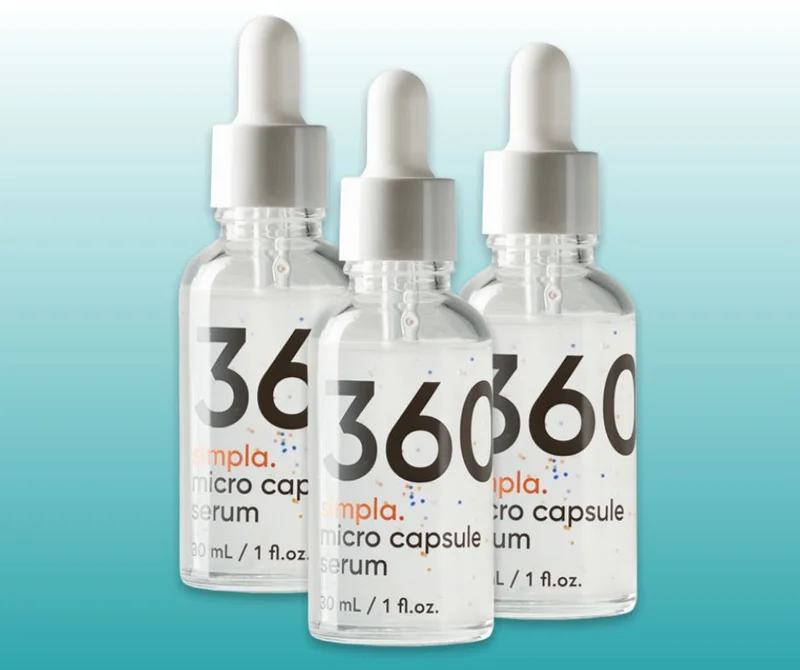
Simpla 360 UK
What is Simpla 360 and what is it for? Ingredients, benefits, contraindications, price and even where to buy it. Real reviews and comments.
Editorial category
Editorial reviews of facial serums: active ingredients, concentration, cosmetic mechanism and price benchmarks.
Products in this category
What is Simpla 360 and what is it for? Ingredients, benefits, contraindications, price and even where to buy it. Real reviews and comments.
This category gathers our analyses of facial serums available through international shipping, with concentrated formulations for various cosmetic purposes: hydration, antioxidation, apparent anti-ageing, dark-spot management, texture improvement.
The serums we review are marketed as cosmetic products under EU Regulation 1223/2009 or equivalent jurisdiction. They comply with cosmetic safety and labelling rules, but they are not medicines and are not authorised to treat dermatological conditions. Any claim of “treating” skin disease falls outside cosmetic scope.
| Ingredient | Main cosmetic benefit | Typical functional concentration |
|---|---|---|
| Vitamin C (L-ascorbic acid) | Antioxidant, brightness, dark spots | 10-20 % at low pH |
| Niacinamide (vitamin B3) | Barrier, pores, sebum, dark spots | 4-10 % |
| Hyaluronic acid | Surface and mid-dermal hydration | 0.1-2 % (multimolecular) |
| Retinol (cosmetic) | Apparent anti-ageing, texture, spots | 0.01-1 % |
| Peptides | Dermal signalling (perceived firmness) | Variable; formulation is key |
| Glycolic / lactic acid | Chemical exfoliation, brightness | 5-10 % |
For more on how we evaluate cosmetic products and our position on overstated marketing, see our methodology and editorial policy .
A serum is a facial cosmetic with a high concentration of active ingredients in a light, fast-absorbing texture. Compared to a conventional cream, a serum typically contains a higher proportion of actives and a lower proportion of occlusives. Apply on cleansed skin before moisturiser. Common active ingredients include antioxidants, peptides, hyaluronic acid, vitamin C, cosmetic retinoids, and alpha-hydroxy acids in functional concentrations.
Ingredients with the strongest cosmetic evidence: **stable vitamin C** (L-ascorbic acid 10-20 %, antioxidant and brightness), **hyaluronic acid** (surface and mid-dermal hydration), **niacinamide** (4-10 %, barrier function, hyperpigmentation, pores), **cosmetic retinoids** (retinol, retinaldehyde — anti-ageing), **peptides** (dermal signalling, mixed evidence), **glycolic/lactic acid** (gentle chemical exfoliation). Concentration and formulation matter as much as the ingredient name.
No. Cosmetic serums can improve the appearance of **fine lines**, hydration, brightness and texture, but established expression wrinkles, deep nasolabial folds, and consolidated lip lines respond to medical treatments such as botulinum toxin, dermal fillers, fractional laser, or deep peels. Expecting aesthetic surgery results from a cosmetic serum leads to disappointment.
Common adverse effects are local: irritation, peeling, redness, burning sensation. They appear especially with potent actives (retinoids, exfoliating acids, high-concentration vitamin C) and on sensitive skin. Photosensitisation risk: **retinoids and acids require daily sunscreen**. Allergic contact reaction: possible with any ingredient, more frequent with botanical extracts and fragrances. Patch-test new products on the inner forearm for 48-72 h before applying to face.
Some ingredients should be avoided during pregnancy and breastfeeding: **retinoids** (retinol, retinaldehyde, tretinoin, isotretinoin — well-established teratogenic risk for oral retinoids; topical caution by absorption), **high-concentration salicylic acid** (>2 %, avoid extensive use), **hydroquinone**. Reasonably safe: hyaluronic acid, niacinamide, vitamin C, peptides. **Consult your obstetrician or dermatologist for specific concerns**.
Hydration and brightness effects can be noticeable within days. Effects on fine lines, dark spots, and firmness typically require **4-12 weeks** of consistent use, since epidermal turnover takes about 4 weeks and deeper dermal changes take months. If after 12 weeks there is no detectable improvement on what was promised, switching formulations is reasonable. Consistency beats brand variety.